
DIY Outdoor Bench: Stylish and Simple on a Budget
Build a stylish DIY outdoor bench with this easy tutorial! Perfect for your garden, patio, or backyard, and budget-friendly too. No nails or screws required!
Skills Required: Beginner. You’ll learn how to make a bench the easiest way possible. I believe the most difficult part of this DIY project is using a table saw, which isn’t really hard (take your time!).
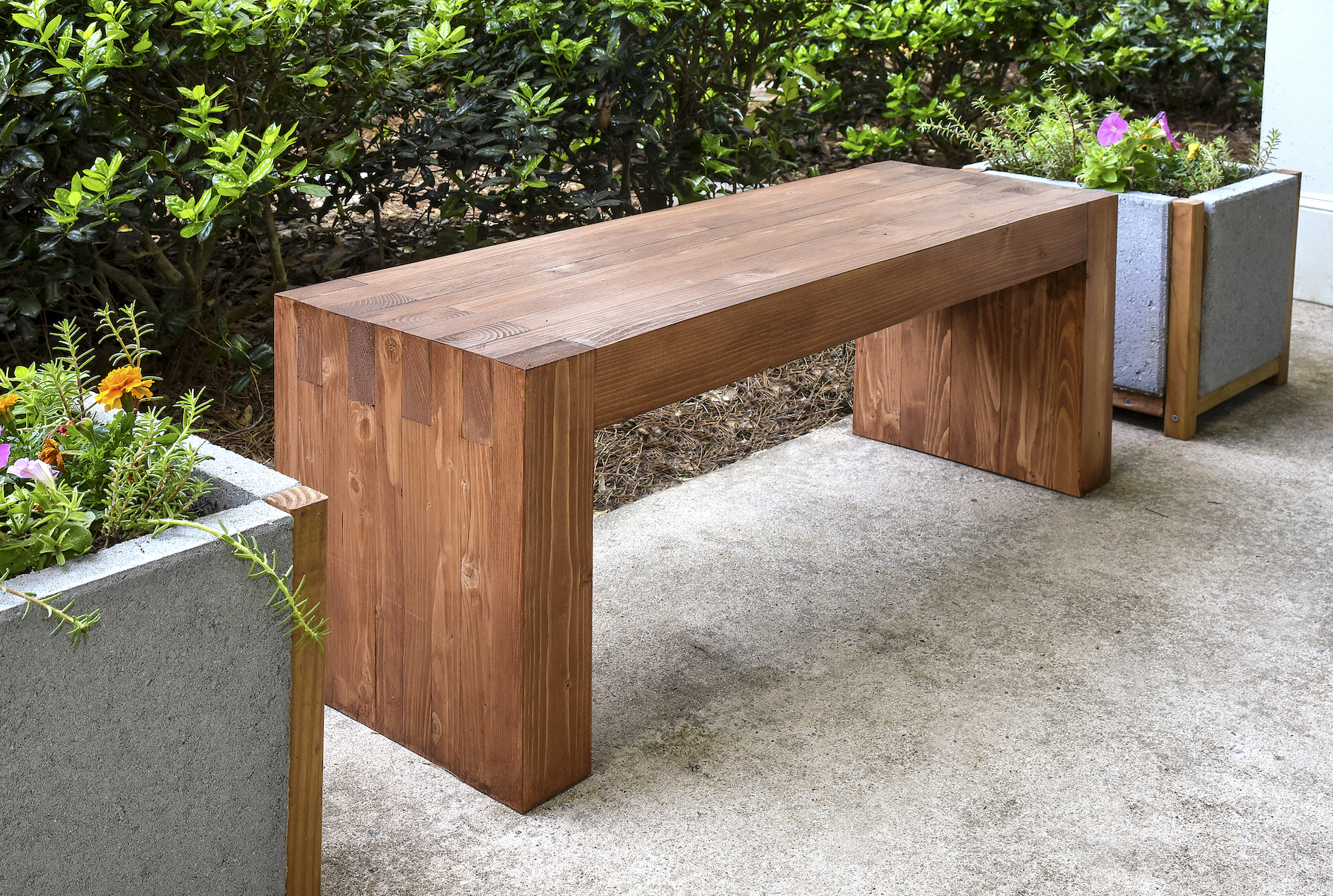
Every porch or outdoor space needs a bench, at least that’s what Steve and I decided the other day. Actually Steve has had the concept for this beautiful bench in his head for a while.
He had looked around at garden benches and wanted to make something without screws and hardware . . . completely with adhesive.
Yet he had some other qualifications as well – the bench had to be modern, inexpensive, load bearing (no falling apart please), and look great. We also wanted it to be an easy woodworking project so anyone could do it.
This DIY outdoor bench project meets all those qualifications and more!
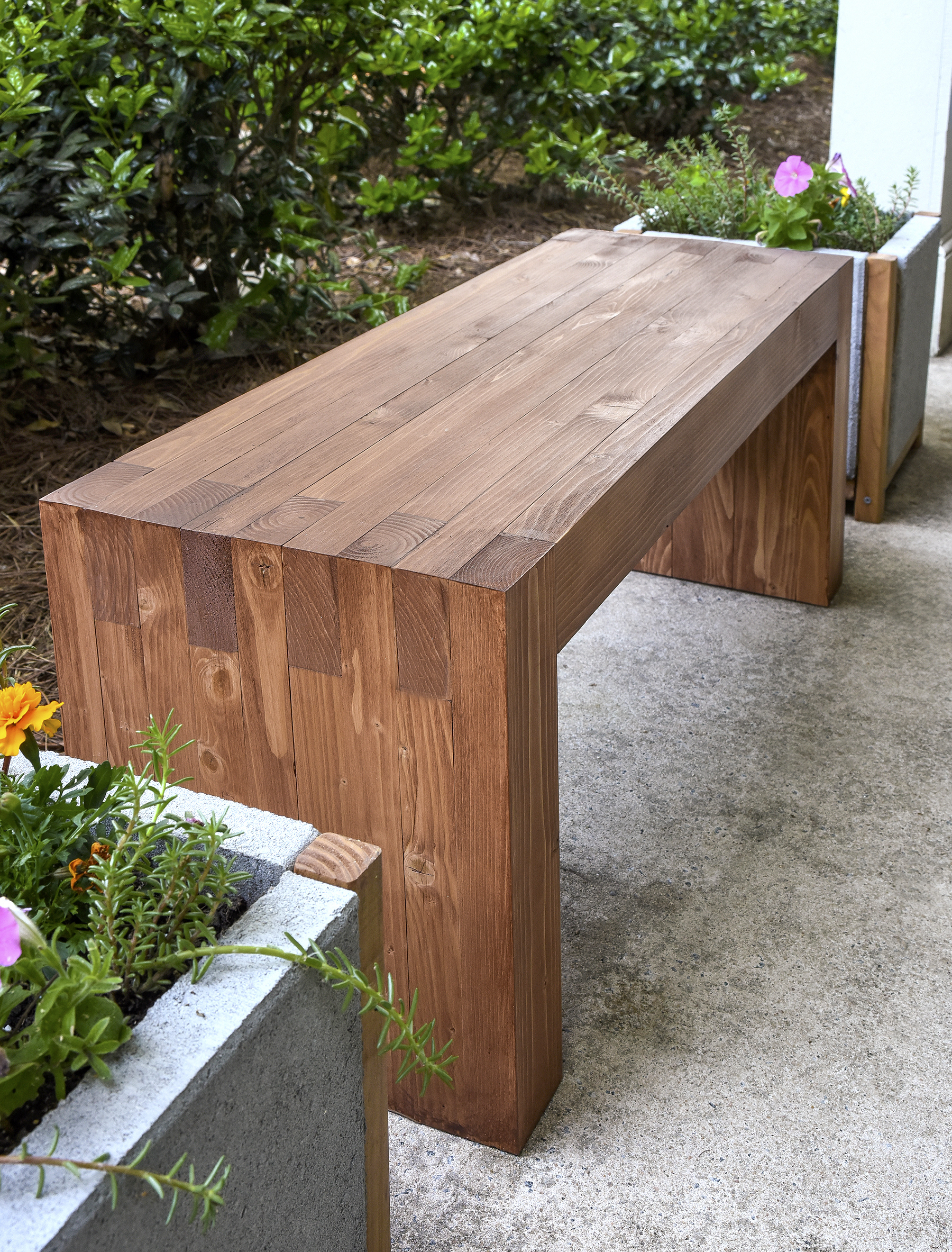
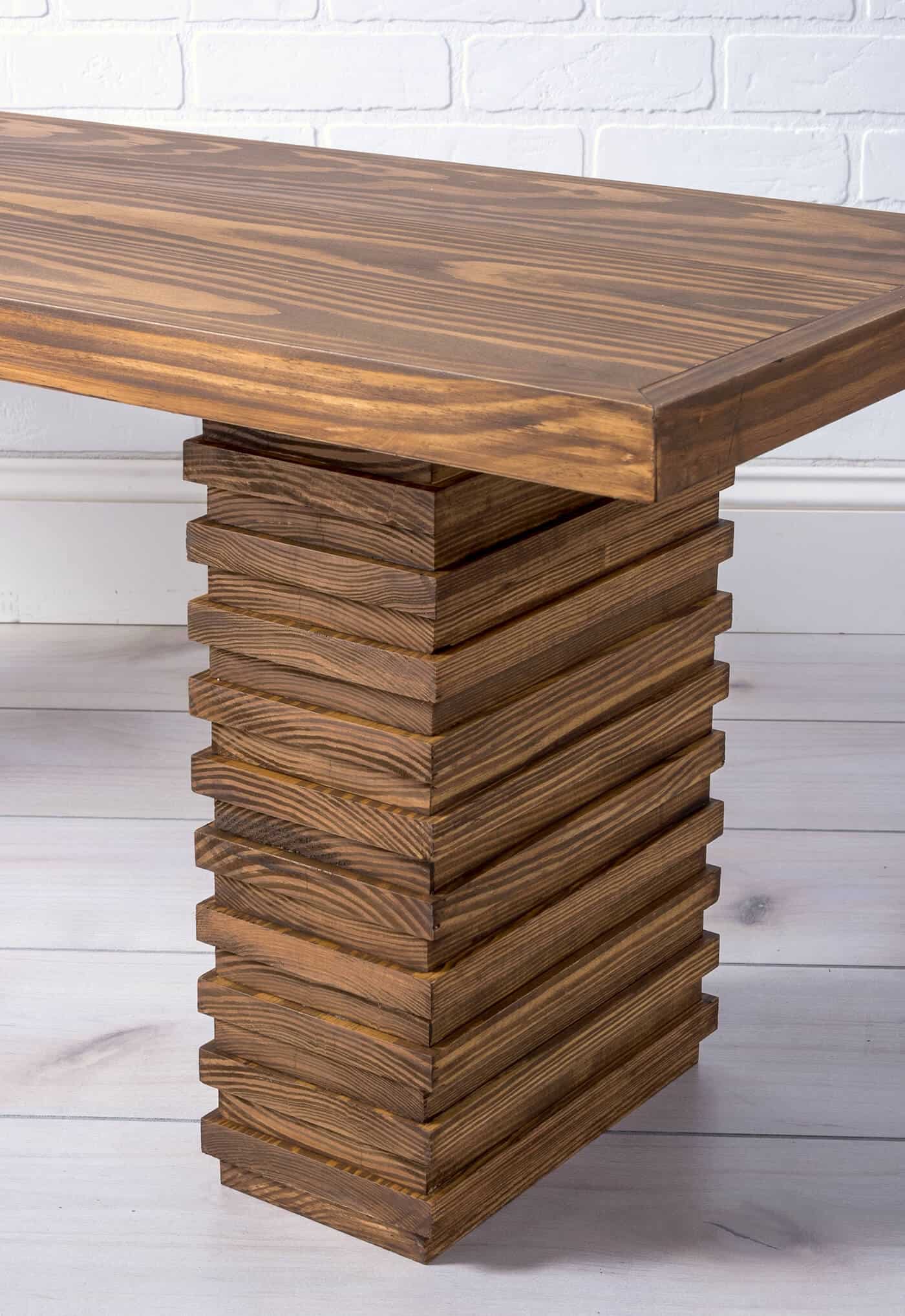
Here’s how this bench came about. It was quite a coincidence that we were flipping through a Williams Sonoma Home catalog the other day and found this Larnaca Outdoor Coffee Table that looks somewhat similar . .
yet has one BIG difference. The Larnaca coffee table costs $1,295, while Steve’s version is $35. Now, ours is outdoor seating while the Larnaca is technically a coffee table, but the idea is the same. You can always modify the size of this DIY outdoor bench to fit your desired specifications.
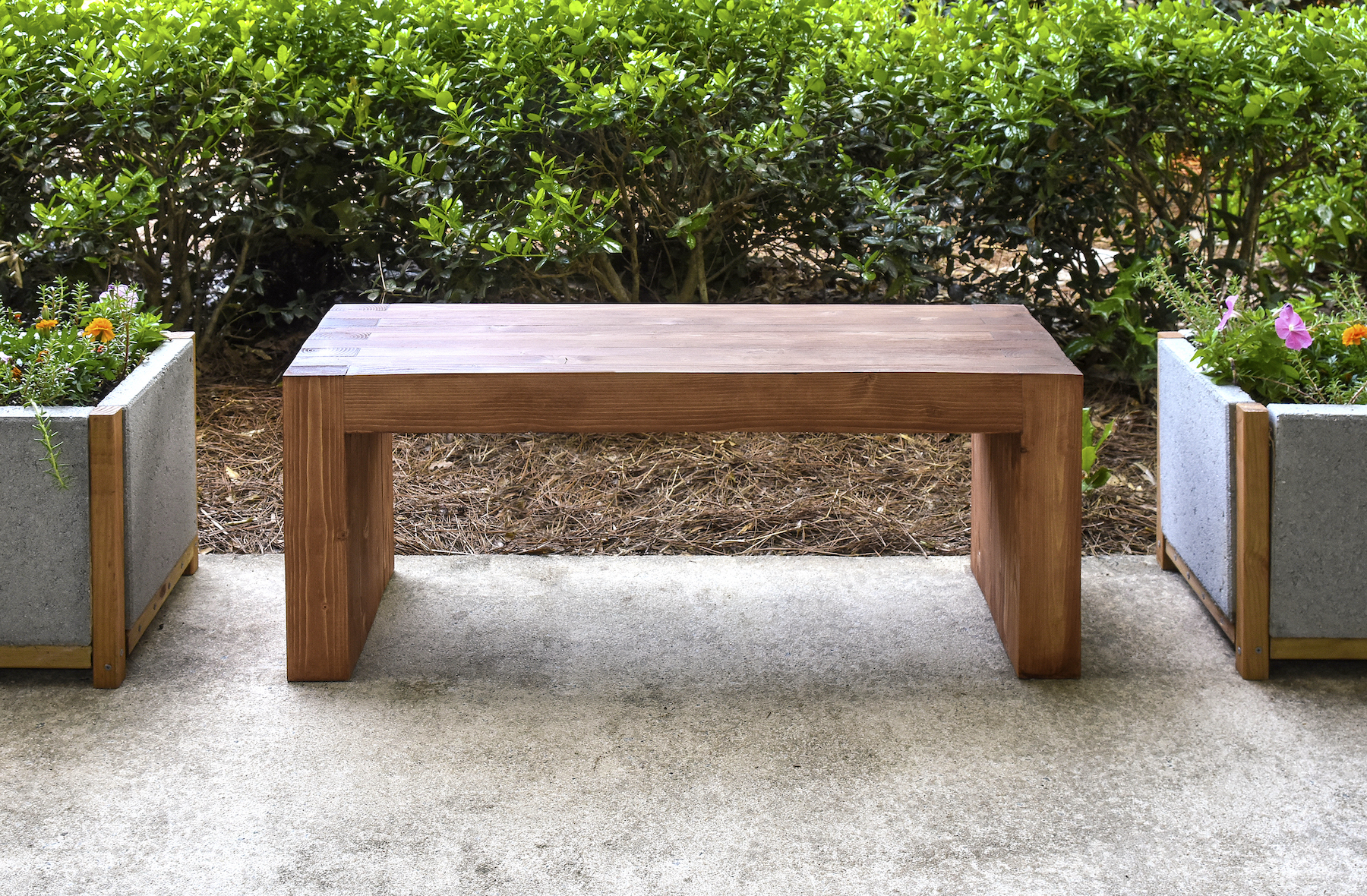
So here’s how to build this bench, with a finished size of 16″ high x 40″ long x 13.5″ deep. You’ll find that building a bench is much easier than you think! Here’s how we built this piece of furniture.
Gather These Supplies
- Regular 2 x 4s – pine, not pressure treated (see Cut List below; also you may want to use pressure treated wood if your bench is going to be exposed to the elements, though it is more expensive)
- Exterior grade Liquid Nails or Titebond III (or other construction adhesive made for wood)
- Bar clamps
- Thompson’s WaterSeal and Stain (Nutmeg)
- Paintbrush
- Rag
- Table saw
- T-square – or something to make sure edges are square
- Hand held belt sander with a 80-grit and 120-grit
- Sanding blocks – 80-grit and 120-grit
- Surface protection – cardboard box, tarp, etc
- Optional – drill and four feet if you don’t want the bench to touch the patio or ground directly
Cut List – you might notice that the measurements don’t quite add up – this is because the ends were milled off and sanded to get the resulting finished size bench.
- 33.5″ long (five pieces)
- 40″ long (four pieces)
- 16″ long (ten pieces)
- 12.75″ long (eight pieces)
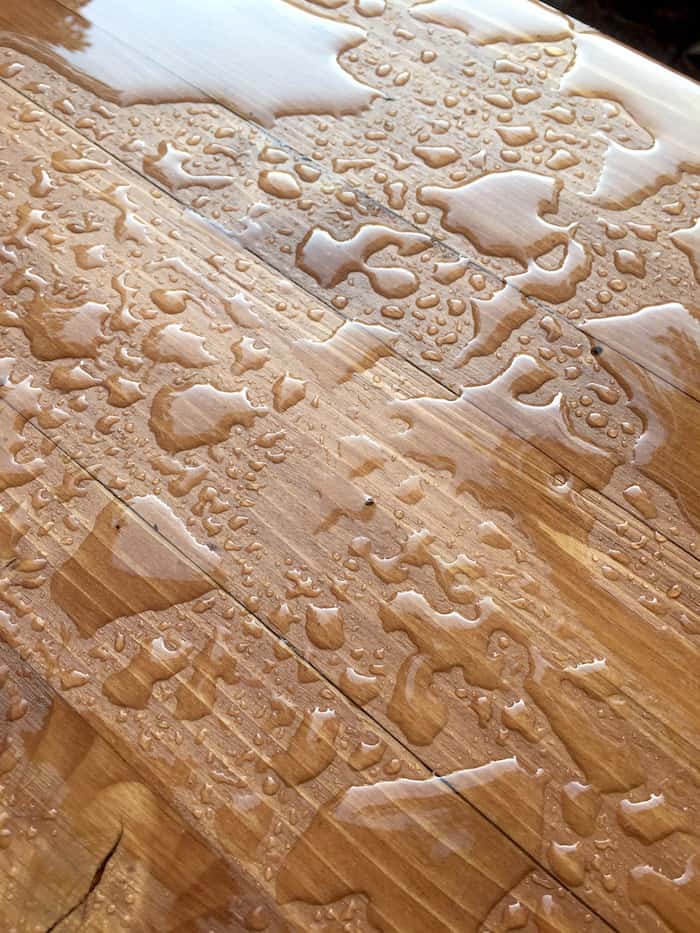
We already had a rain here so I also wanted to show you how well the stain works – the water just pools on top and comes right off . . . no soaking into the wood!
We hope you enjoy our DIY outdoor bench! The printable tutorial is below. Also I keep getting questions about the planters – I did make those as well! Find them here.
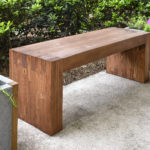
DIY Bench
Equipment
- Bar clamps
- 1 Belt sander
- 1 T-Square
Materials
- Regular 2 x 4s – pine see cut list in notes
- Wood glue we used Titebond III
- Thompson's WaterSeal
- Rag(s)
- Sanding block 80-grit and 120-grit
- Cardboard box or other surface protection
Video
Instructions
- Using the table saw, “mill” the 2″ edges of every piece of wood so that you get a very square edge (as opposed to the rounded edges that come on a 2×4). This will give your bench a more modern look.
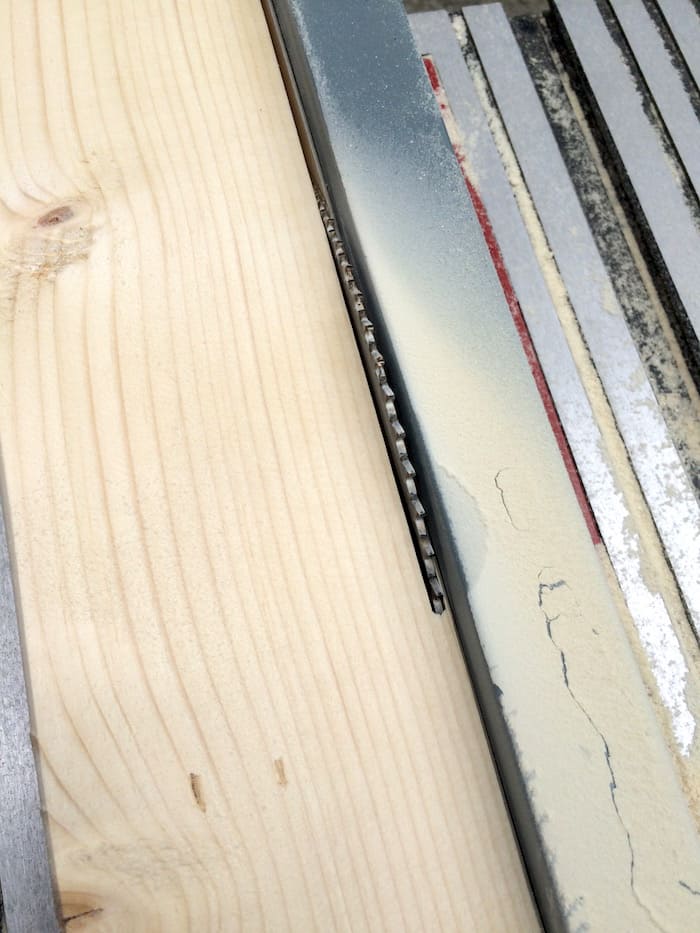
- Cut the pieces of wood according to the cut list in the notes. Keep in mind, these measurements produced a finished bench that is 16″ high x 40″ long x 13.5″ deep . . . AND a little extra was left for the milling and sanding process. If you want to customize the size of your bench, you’ll need to adjust these cut lengths.
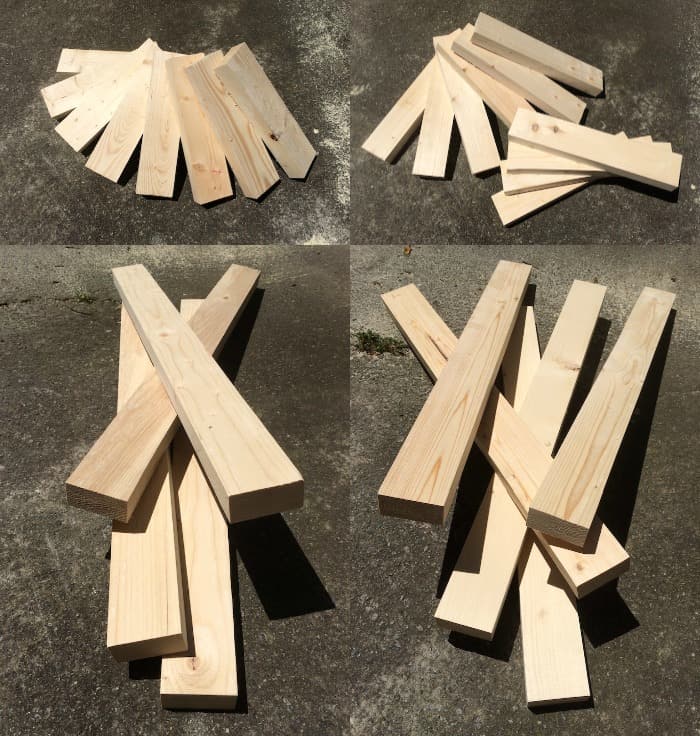
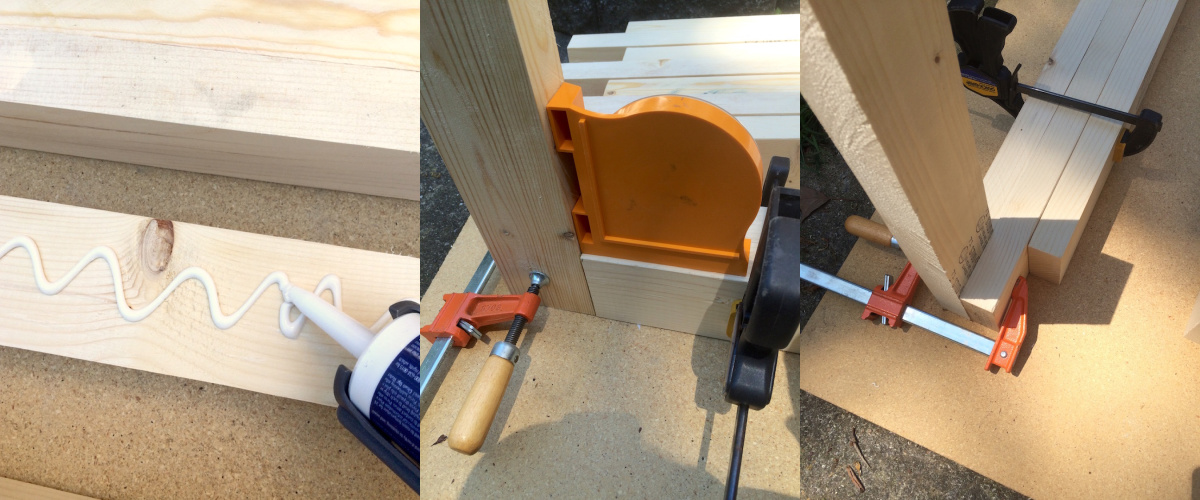
- Use your pieces to create a box joint. Place a 40″ piece of wood on the ground, with a 33.5″ piece in the center. On each end, you’ll place a 16″ long piece perpendicular to the other two pieces, as shown in the photo above. Make sure everything is even and as flush as possible (and use a t-square or other item if necessary to for a right angle), then glue into place and clamp.
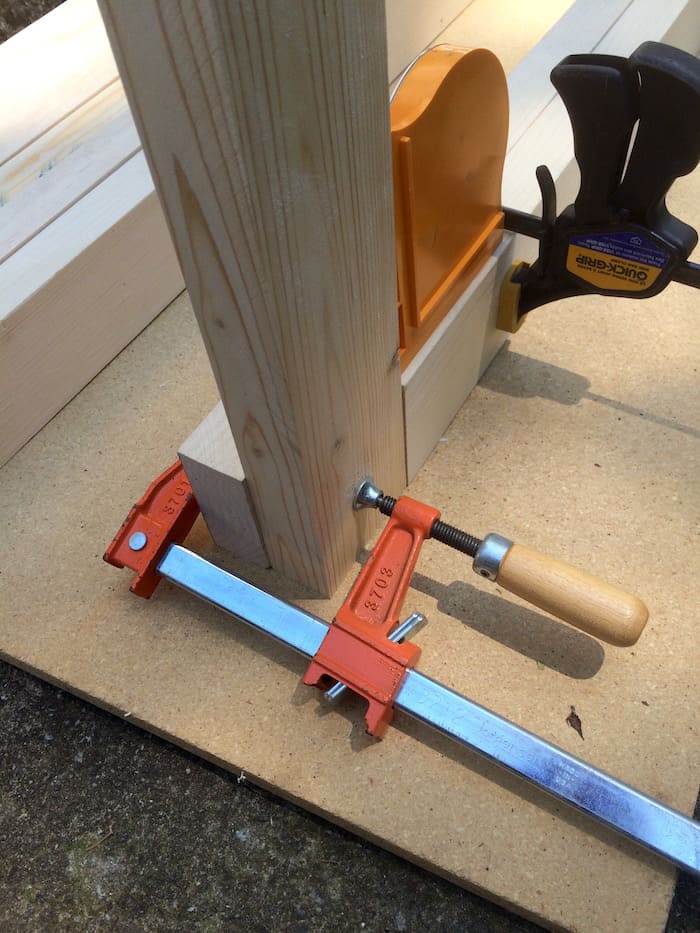
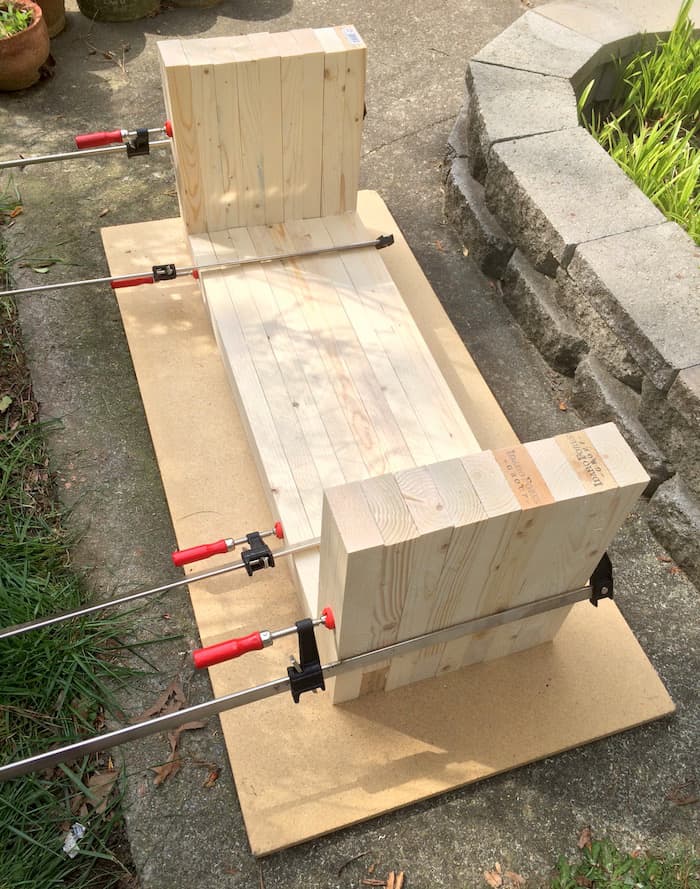
- Add Liquid Nails to the wood, setting it up in your pattern as shown in the final image then adding clamps to hold it together. Remember that you’re doing a modified box joint, so you’ll have one long piece of wood, then one short piece, then long, then short, and so on.
- Once your bench is full assembled, keep it clamped and let it dry overnight.
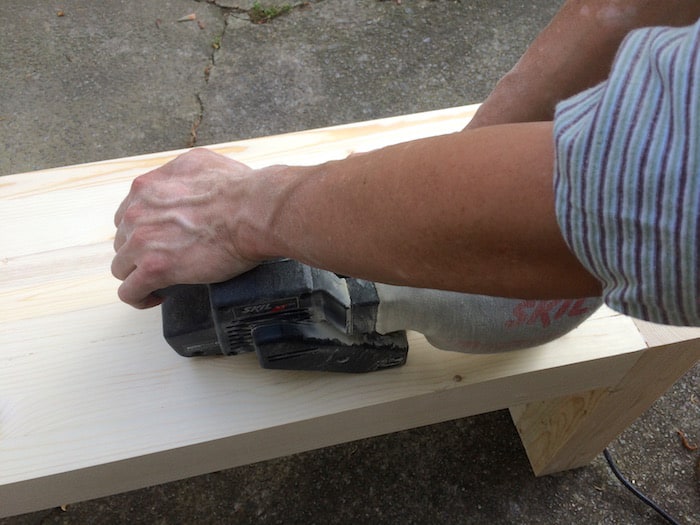
- Undo the clamps and sand with the belt sander to get everything even. Don’t forget to sand with the grain! Sand until it’s completely smooth and flat. Do this on the legs, too. Then wipe away all of the sanding dust.
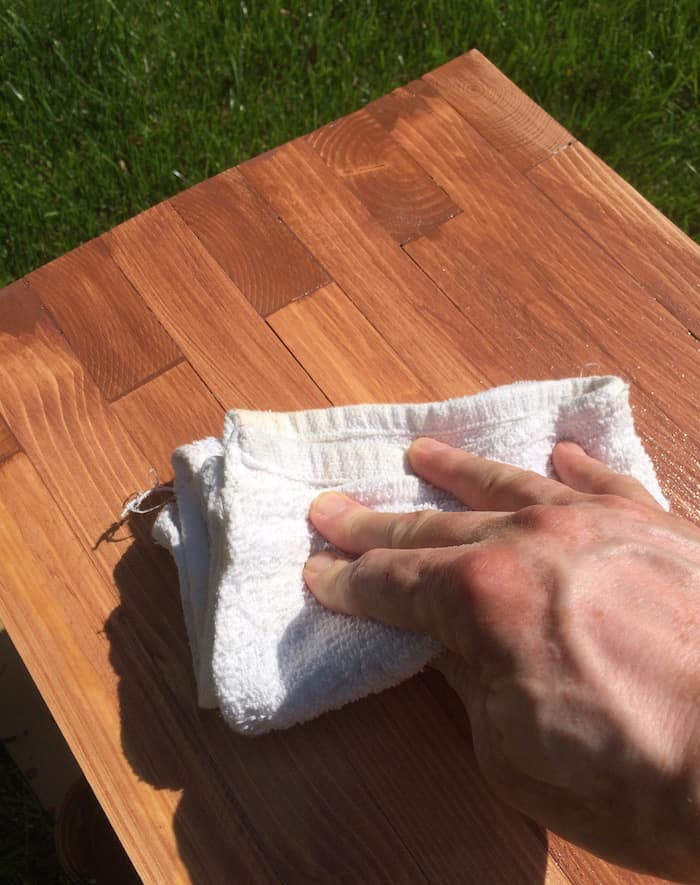
- Use stain to paint the bench. Applying stain is relatively easy. You can use a brush, paint it on, then wipe it off. Seal with Thompson's Water Seal.
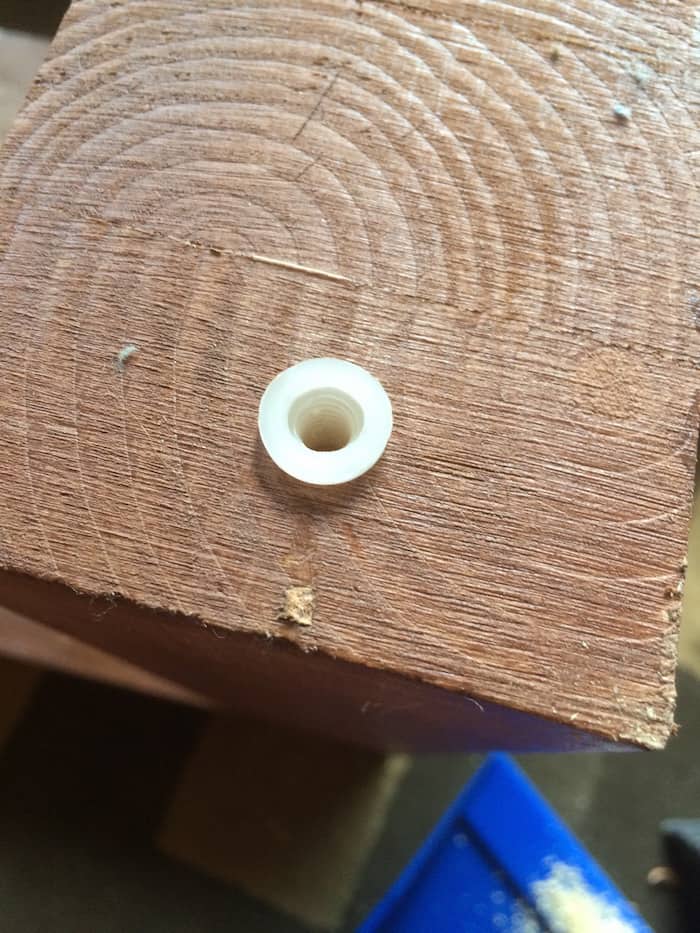
- Add furniture feet to keep your bench off of the ground. Drill a hole, insert the foot, and repeat on all four corners of the bench bottom.
Notes
- 33.5″ long (five pieces)
- 40″ long (four pieces)
- 16″ long (ten pieces)
- 12.75″ long (eight pieces)
- organize the pieces of wood without gluing FIRST so that you understand how the bench goes together;
- begin at one end of your bench and start assembling with the Liquid Nails, using the clamps as placeholders as you go along;
- continue add Liquid Nails, wood, and increase the size of your box clamps until the bench is fully assembled
What do you think? If you have any similar projects or if you’ve done something like this and would like to share your tips, we’d love to hear them in the comments! Thank you!
If you love DIY benches, I’ve got another one you’re going to want to check out: Crate and Barrel Inspired Entry Bench. AND if you want to see another inspired knockoff we did – check out our West Elm DIY coffee table. We made it for $45 . . . original price of $999!

FIRST OF ALL THANKS FOR EVERYTHING – MY FIRST BENCH IS DRYING OUTSIDE RIGHT NOW AND ALTHOUGH I HAD MORE INCONSISTENCIES TO FIX THAN YOU DID DUE TO A LACK OF PROPER WOOD CUTTING EQUIPMENT (I’M USING POWER HAND EQUIPMENT FOR ALL THE 2X4 CUTTING SO IT CAN BE DICEY) IT STILL WORKED QUITE WELL.
MY QUESTION IS THIS, COULD’NT YOU HYPOTHETICALLY MAKES A TABLE USING THE EXACT SAME METHODS AS THIS BENCH TO GO ALONG WITH THE BENCH? I KNOW I’VE SEEN SIMILAR TABLES IN WEST ELM AND STORES OF THAT ILK WITH THIS COMPOSITION – AND THIS IS THE TABLE I WOULD LIKE TO MAKE FOR MY DESK. ANY ADVICE OR GUIDANCE? I KNOW ITS GOING TO NEED SOME ADDITIONAL SUPPORT AND A LOT MORE WOOD, BUT STILL, I THINK ITS GOING TO BE A GREAT TABLE. ALSO, WHY IS THIS ALL IN CAPS LOCK BY DEFAULT? ITS REALLY CONFUSING.
Hi Holden! I’m so excited that you made the bench! That’s awesome!
And yes, you can definitely make a table to go with the bench. What you might want to alter is 1) either actually screwing things together or 2) using braces underneath with screws that can’t be seen. So that it looks on top like it’s glued only, but underneath you have some support 😀
Thank you so much. I’ll let you know what I end up doing. This project has me investing in some additional power tools so I’ll get back on the project as soon as everything arrives from amazon.
Thanks!
Did you end up making a table to go with this??
I made something very similar out of strips cut from some reclaimed birch plywood, with the edge boards made from walnut. Pic – https://i726.photobucket.com/albums/ww269/Waldo56/5e12a57a-d1f7-4485-b472-650b7c1d9e07_zpsqo6mba1j.jpg
A couple points:
– a type 3 wood glue like Titebond 3 would be a lot stronger than construction adhesive. Type 3 glues are waterproof and are suitable for outdoor use.
– PolyUrethane would be a very poor choice for a finish. UV rays break it down quickly, it is not made for exterior exposure. Use a marine (spar) varnish instead or even better, untinted base 4/5 oil based siding paint, which dries clear and is incredibly durable outside. Spar varnish should be right next to the poly; it isn’t quite as durable as the paint, but it is at least made for exterior exposure.
– A hand plane, if you have access to a decent one (not a block plane), will do a better job than a belt sander, it’ll leave a better finish and make the surface flatter.
Thanks for the tips Jay! We’re going to look into both the Titebond 3 and the 4/5 oil based siding paint. Do you use it for indoors too?
Use the paint on the interior? No. Each finish has its purpose, exterior finishes need to be flexible (wood expands/contracts A LOT outside), have strong UV inhibitors (sunlight will destroy interior finishes within weeks), and be waterproof. Most of these properties are useless indoors, where harder, abrasion resistant and wood enhancing finishes are preferred.
Wood glue should always be used for gluing wood to wood. Modern wood glues are incredibly strong once cured, stronger than the wood itself.. Titebond 3 is >10x stronger than liquid nails. Type 3 glues are a bit pricier than basic wood glues, but the waterproof property is needed outdoors.
I built the bench, it is currently clamped. I am very excited to see the finished product! This is the first I have made with glue alone (construction adhesive) so I am a little nervous about it staying together! Thanks for everything!
Clair
Just commenting about the picture of cutting the wood on the table saw. The way shown is incorrect and dangerous. You always want the small cut to be on the open side of the blad, not trapped between the blade and fence.
Thank you for the tip!
Nice looking bench. Curious about the planters though, did you make those as well?
Hi Danny! Yes – that tutorial is here! https://diycandy.com/paver-planter/
You said he used 4 2×4’s but at what length?
Hi Tim! They were 8′ 2x4s 😀
If you use polyurethane, do you need to stain first?
Salman, you don’t HAVE to stain. You can simply seal the wood as is if you like the color 😀
I am currently building this bench (not sure why all caps is on thought I turned it off) but anyway, how long do you clamp between adding new layers? A few minutes, a couple hours..cause the clamps are in the way of adding more..
Steve only clamped it long enough to hold it together to add new pieces – so I’d say about 10 minutes. 😀
How many 2 x 4’s did you buy?
nevermind, saw the answer in an earlier post! love this bench!
Thanks for sharing. Did Steve run the 2X4s thru a plainer or joiner first to get them so square? Normally the corners are more rounded..
Great job.
Andrew, he used a table saw. But we JUST purchased a planer and are very excited about it 😀
This will be my next project. The design is simple and elegant. Thank you for sharing the details.
WHat a beautiful bench! Can you please provide the link to the furniture feet you used? I searched lowes site and could not find them. It is exactly what we’ve been looking for. THanks!
They have such a weird name – but I found them http://www.lowes.com/pd/Waxman-Steel-Non-Swivel-Furniture-Furniture-Glides/3043916 (and thank you!)
Thanks so much for the link!